
Blog
The Invisible Engine: How Automation is Solving the Logistics Throughput Crisis

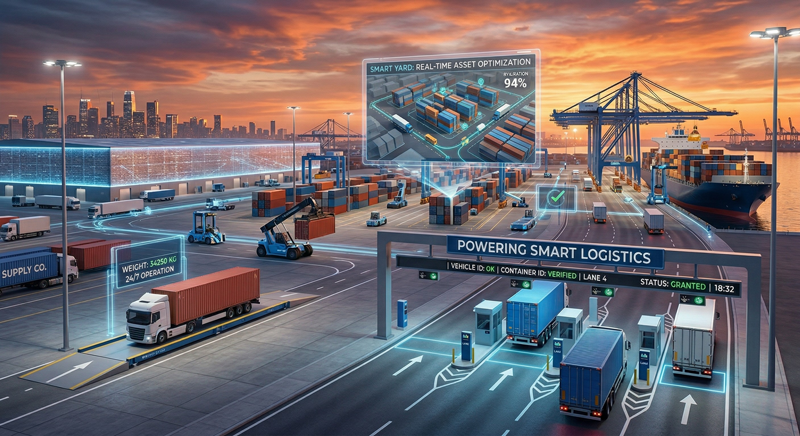
In the modern supply chain, the greatest enemy isn’t distance—it’s congestion. As global trade volumes rise, terminals and warehouses are reaching a breaking point where manual processes simply cannot keep up. Suraj Informatics, through its Gativra suite, is providing the “invisible engine” of automation that allows these facilities to handle more volume with less friction.
Here is how a fully integrated, automated terminal operates to stay ahead of the curve.
1. Precision Scheduling: The End of Terminal Queues
Congestion often starts before a truck even reaches the gate. Without a coordinated plan, vehicles arrive in “peaks,” leading to hours of idle time. The Gativra-iVBS (Vehicle Booking System) solves this by facilitating efficient time slot allocation for container pick-up and drop-off.
Because the iVBS integrates seamlessly with existing Terminal Operating Systems (TOS) and Gate Operating Systems (GOS), it ensures a balanced flow of traffic throughout the day. This synchronized data exchange means fewer bottlenecks and a much faster turnaround for drivers.
2. The High-Speed Gate: From Minutes to Seconds
Traditional gatekeeping—checking papers and manually recording plate numbers—is the primary cause of terminal “chokepoints.” The Gativra-iGOS (Gate Operating System) replaces manual checks with high-speed, automated recognition.
By utilizing ANPR (Automatic Number Plate Recognition) and CCR (Container Recognition), the system identifies and validates every vehicle and container in motion. Combined with RFID authentication, it ensures that only authorized cargo moves through the gate, reinforcing security while maintaining maximum throughput.
3. Yard Management: Maximizing Every Square Inch
Once inside the gate, the challenge shifts to asset placement. A disorganized yard leads to “buried” containers and wasted fuel. GATIVRA-YardX provides the real-time visibility needed to track every trailer and vehicle.
With Automated Scheduling, YardX prevents bottlenecks by directing vehicles to the most efficient locations, ensuring that resources are allocated based on real-time data rather than guesswork. This precision reduces fuel expenses and significantly lowers the operational cost per move.
4. 24/7 Weighing Without the Personnel
Weighing is a regulatory necessity that often slows down the exit process. The Gativra-iWB (Unmanned Weighbridge) removes the need for a physical operator, allowing for 24/7 operation.
This automation offers a triple benefit:
-
Higher Efficiency: Increased transaction volume as processing becomes a “drive-through” experience.
-
Reduced Human Error: Digital sensors eliminate the inaccuracies of manual data entry.
-
Substantial Cost Savings: Eliminating the need for constant staffing results in direct labor savings.
5. Warehouse Traceability: The iWMS Advantage
The automation journey ends in the warehouse, where the iWMS (Warehouse Management System) ensures every item is accounted for. From inventory tracking that provides total stock visibility to automated order management that speeds up picking and packing, the iWMS optimizes the entire internal workflow. By automating goods receiving, it ensures that space utilization is always at its peak.
Conclusion: Staying Competitive in a Digital World
The difference between a struggling logistics operation and a market leader is integration. By combining the Gate Operating System, Vehicle Booking System, and Yard Management, Suraj Informatics helps organizations build a smarter, faster, and more secure supply chain.
Stop managing your logistics manually and start Powering Smart Logistics.
Explore the full Gativra range at www.surajinformatics.com or call us at +91 84540 44102 to schedule a demo.